

background music for retail stores: boost sales and mood
Getting the background music right in a retail store is about so much more than just filling the silence. When it's done properly, it's a powerful tool that can genuinely increase dwell time, boost sales, and cement a brand's identity. The trick is to ditch the generic, off-the-shelf playlists and craft an audio experience that speaks directly to the target customer and the specific atmosphere the client wants to create.
Designing a Brand-Aligned Audio Experience

Before a single speaker is even considered or a metre of cable is run, the most crucial step is to map out a clear audio blueprint. This is all about a detailed consultation, translating abstract brand concepts into a concrete audio strategy. You have to define the why before you get to the what.
The first thing to nail down is the store's core identity. Is it a high-end luxury boutique that needs an exclusive, sophisticated feel? Or is it a fast-fashion joint buzzing with a young, energetic crowd? The audio has to feel like a natural part of the brand’s personality.
Deconstructing the Brand's Vibe
To really get to the heart of a brand's sound, we need to ask some pointed questions that go way beyond "what genre do you like?". The answers will directly shape the music selection, tempo, and even the volume levels.
Think about these key areas:
- Target Demographics: Who are the customers? You need to know their age, lifestyle, and musical tastes. A playlist for a Gen Z streetwear shop will sound completely different from one for a store specialising in classic menswear. It’s night and day.
- Desired Customer Behaviour: What action do you want shoppers to take? An upbeat, high-tempo playlist can encourage faster turnover in a busy convenience store. On the other hand, a slower, more chilled-out tempo can increase dwell time by nearly 40%, making people feel more relaxed and comfortable browsing in a furniture showroom or bookshop.
- Brand Adjectives: Ask the client for three to five words that describe their brand. Are they "modern, minimalist, and calm" or "bold, vibrant, and playful"? These words become the North Star for curating the music.
A classic mistake is letting the store owner's or staff's personal music taste dictate the playlist. The audio experience has to be designed for the customer, aligning with their expectations and the brand's goals, not what someone fancies listening to on their shift.
Translating Atmosphere into Audio Goals
Once you've got a solid picture of the brand and the desired customer experience, you can start setting specific audio objectives. This is where we connect the brand's 'vibe' to the technical side of the sound system design. The aim is to create a consistent, intentional atmosphere right across the space.
Let's take a luxury brand described as "exclusive, refined, and calm". This might translate into these audio goals:
- Genre: Neo-classical, ambient electronic, or curated indie-folk.
- Tempo: Slow to mid-tempo, usually somewhere between 60-90 beats per minute (BPM).
- Volume: Kept at a low, unobtrusive level. It should add to the atmosphere without drowning out conversations.
- Zoning: You might want a slightly different, even quieter playlist for the fitting rooms to create a more private, comfortable experience. Modern systems offer powerful control over these distinct zones. If you want to explore advanced options, you can learn more about how an NMX audio matrix with tablet control can help manage complex retail environments.
The Psychology of Sound in Retail
The effect music has on shopper psychology is no secret. Familiar pop hits can create a positive, feel-good vibe, making shoppers more open to new products. Conversely, instrumental or less-familiar tracks can prevent distraction, letting customers focus more on the merchandise itself.
By carefully thinking through these elements in the initial design phase, the background music moves from being a simple afterthought to a strategic business tool. It ensures the entire audio system, from the hardware you choose to the final tuning, is built on a solid foundation of purpose and brand alignment.
Once you’ve nailed down the audio strategy, it’s time to get hands-on and pick the gear that’s going to make it all happen. Choosing the right hardware is non-negotiable for delivering that clear, consistent sound that makes a shop feel great, rather than just noisy. Get this bit wrong, and you risk creating a jarring, uneven experience for customers.
The real aim here is to create a totally seamless audio backdrop. That means even sound everywhere, with none of those annoying 'hot spots' where the music is blasting, or dead zones where you can't hear a thing. Every single component, from the speakers right down to the amplifier, has a part to play in getting that balance just right.
Choosing the Right Speakers for the Space
Speakers are the most obvious part of the system, and your choice really hangs on the shop's architecture, ceiling height, and general aesthetic. There's no single 'best' speaker – it always comes down to the specific space you're working with.
-
Ceiling Speakers: These are pretty much the standard choice for any retail space with suspended or plasterboard ceilings. They give you a super discreet, clean look and, if you space them properly, the coverage is fantastic. They’re perfect for creating that ambient, all-encompassing sound.
-
Surface-Mount Speakers: If you can't get into the ceiling – think solid concrete or listed buildings – then wall-mounted speakers are your friend. You can angle them to push the sound exactly where you need it, which is great for focusing audio in certain zones or just dealing with tricky room shapes. Modern options like the Sonora-3 series offer compact and stylish designs that blend in nicely with contemporary shop fits.
-
Pendant Speakers: Got a space with really high, open ceilings, like an old warehouse conversion or a big atrium? Pendant speakers are a brilliant solution. You hang them down from the ceiling like light fittings, which brings the sound closer to the listener. This means you get clarity and presence without having to crank the volume up to ear-splitting levels.
It’s a classic mistake to try and save a bit of cash by using fewer speakers. All that happens is you have to turn the volume up on the ones you do have, creating harsh, loud spots and leaving other areas in total silence. You’re always, always better off using more speakers running at a lower volume. The result is a much more balanced and comfortable sound for everyone.
Matching Amplifiers and Mixers to the System
Think of the amplifier as the engine of your audio system; it has to be the right size for the job. An underpowered amp will just struggle, giving you distorted sound and potentially frying your speakers. On the other hand, a massively overpowered one is just a waste of money.
The key is to work out the total power draw from all your speakers. For 100V line systems – which are the industry standard for commercial jobs because they're so efficient over long cable runs – it's a simple case of adding up the wattage 'tap' setting of every speaker. Your amplifier’s output should be about 20% higher than this total figure. This extra headroom means the amp isn't red-lining all day, which results in cleaner sound and much better long-term reliability.
A mixer, or a combined mixer-amplifier, is what gives you proper control. Even if it’s just a simple background music setup, you'll want a mixer for a couple of key reasons:
- Source Management: It lets you hook up your main music player alongside other things, like a microphone for in-store announcements or an audio feed from a digital sign.
- Volume Control: You get a master volume knob and usually individual level controls for each input, making on-the-fly adjustments a piece of cake.
- Tonal Shaping: Even basic bass and treble controls on a mixer are invaluable. They let you tweak the sound to suit the room’s acoustics – for instance, you can dial back the bass in a big, echoey space to stop it from sounding boomy.
By carefully thinking through how the physical shop environment and the tech specs of the hardware interact, you can build a system that not only sounds fantastic but is also dependable, easy to expand, and perfectly in tune with the brand's goals.
Okay, you've got your hardware spec'd out. The next massive piece of the puzzle? The music itself. This is where a lot of projects can fall down, because sourcing legally compliant, brand-appropriate content is a minefield if you don't know what you're doing.
Thinking you can just hook up a personal Spotify account is a huge, and surprisingly common, mistake. It’s a fast-track to hefty fines, as personal streaming services are not licensed for commercial use.
Before you even think about playlists, you need to get your head around the legal landscape in the UK. Playing any music in a public space – and yes, a shop absolutely counts – is legally defined as a 'public performance'. That means you need permission, and a licence, from the people who own the rights to that music.
Understanding The Music Licence in the UK
Here in the UK, two main organisations handle music rights for artists, composers, and record labels. If a retail store wants to play recorded music, they are legally required to get licences from both.
- PPL (Phonographic Performance Limited): This licence gives you the legal green light to play recorded music in public. PPL looks after the interests of the performers and record companies—the people who own the rights to that specific recording.
- PRS for Music: This one covers the song itself—the composition and lyrics. PRS collects the royalties for the songwriters, composers, and music publishers.
A simple way to think about it is that PPL covers the sound recording you actually hear, while PRS covers the underlying song. Because these are two distinct sets of rights, you almost always need both licences to be fully compliant. Together, this is often just called The Music Licence.
One of the most common and costly slip-ups we see is businesses thinking a PRS for Music licence is all they need. Without the PPL licence, you're only halfway there and still wide open to legal action for copyright infringement.
Sourcing Your Music Content
Once the legal side is clear, the big question is: where do you actually get the music? Retailers really have two main paths. They can either handle all the licensing directly and curate their own music, or they can partner with a specialist background music service that does it all for them.
And remember, the hardware you choose is directly linked to delivering this content effectively. Something as simple as ceiling height can dictate your entire speaker strategy.
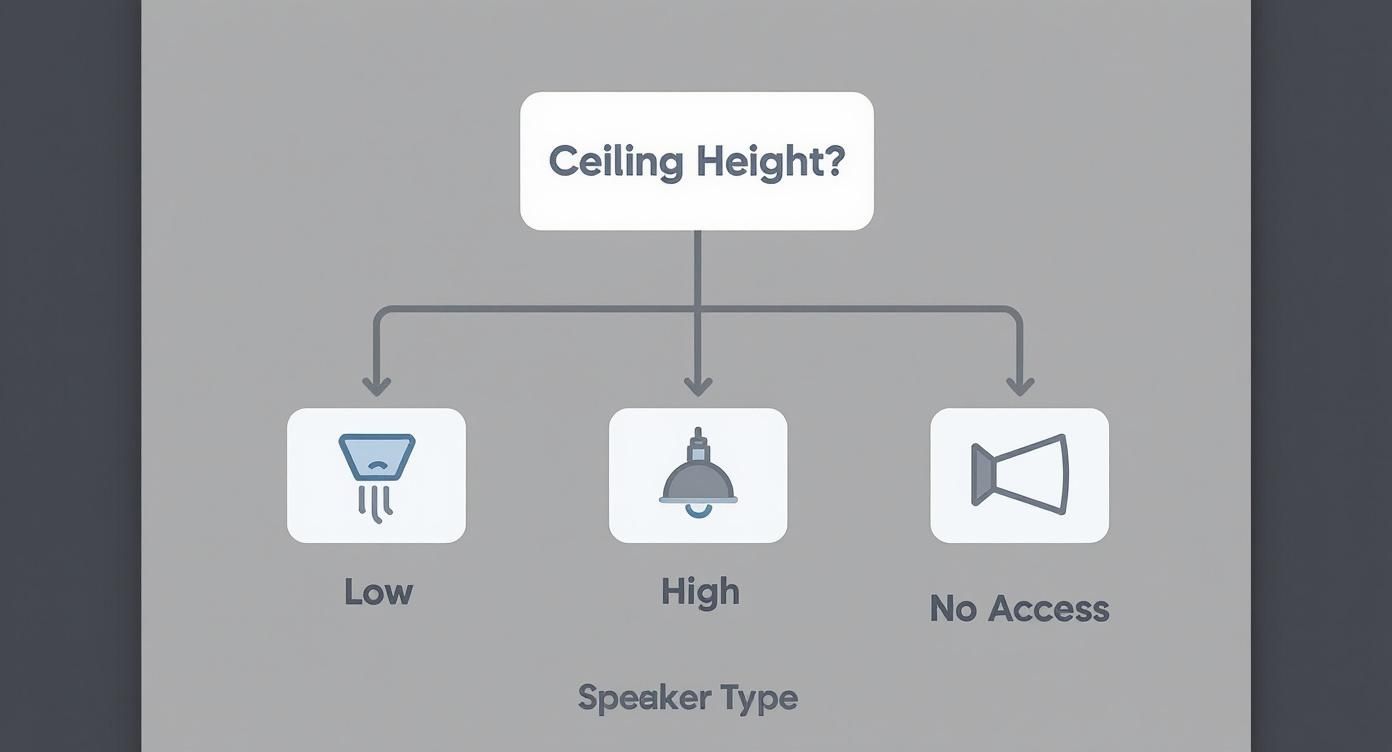
This decision tree just goes to show how the physical space is fundamental to getting the right gear for the job.
The route you take for sourcing music has a massive impact on your costs, how much work is involved, and how consistent your brand sounds.
Direct Licensing vs. Specialist Music Services
So, what’s the best way forward? Let’s look at how the different options stack up. Sourcing and licensing music for a retail environment isn't as simple as it sounds, and the choice you make has long-term consequences.
| Sourcing Method | Licensing Management | Content Curation | Typical Cost Structure | Best For |
|---|---|---|---|---|
| Direct Licensing | Retailer buys and manages The Music Licence directly from PPL PRS Ltd. | Retailer is fully responsible for building and updating playlists from their own purchased music (CDs, downloads). | Annual licence fee + costs of purchasing all music content. | Single-location businesses with very specific, niche music needs and the resources to manage it. |
| Specialist Music Service | All licensing fees (PPL & PRS) are included in the subscription cost. The service handles all payments and compliance. | Access to vast, pre-cleared music libraries. Playlists are professionally curated, often tailored to the brand. | All-in-one monthly or annual subscription fee. | Most businesses, especially multi-site retailers seeking consistency, brand safety, and simplified management. |
Going direct means you purchase The Music Licence yourself and then pull music from CDs, digital downloads, or other media you own. You get total control, sure, but you also carry the entire burden of curation, scheduling, and making sure every single track is brand-appropriate.
A dedicated background music service for retail, on the other hand, is a much slicker, all-in-one solution. They bundle all the necessary licensing fees into their subscription, which takes a massive administrative headache off the table. For multi-store chains, these services offer centralised control, letting you push updates to every location instantly. Trying to manage that yourself is a logistical nightmare.
The UK's retail sector is a huge player, making up about 15.6% of the European commercial background music market. And it's overwhelmingly modern, with 76% of commercial music now delivered via cloud streaming services. These platforms allow for dynamic playlist changes based on real-time data, something you just can't do with a stack of CDs. You can dig into more of this data on the global commercial background music market to see the trends.
From our experience, for the vast majority of AV integrators and their retail clients, partnering with a specialist service is the smartest move. It's more efficient, cost-effective, and legally secure. It turns background music from a compliance headache into a powerful, easily managed branding tool.
Installation Tips for Perfect Sound Coverage

Specifying the right hardware is only half the battle. A brilliant audio system is only ever as good as its installation, and it's the hands-on best practices that separate a truly professional, immersive soundscape from a distracting, amateur setup.
The real goal here is to achieve perfectly balanced coverage. You're aiming for a seamless audio backdrop that genuinely enhances the retail environment, rather than detracting from it. Getting this right means skillfully avoiding common acoustic gremlins like echoes, dead spots where the sound vanishes, and hot spots where it’s just uncomfortably loud. It's a game of precision and planning.
Strategic Speaker Placement for Even Coverage
The single biggest factor in getting even sound distribution is, without a doubt, speaker placement. Your mission is to create an overlapping grid of sound, so shoppers experience a completely consistent volume level as they move through every part of the store.
A classic mistake we see all the time is using too few speakers and just cranking up the volume. This creates a harsh, directional sound that’s unpleasant for anyone standing directly underneath. The professional standard is the complete opposite: use more speakers, each running at a lower individual volume. This approach creates a gentle blanket of sound that feels ambient and comfortable.
For ceiling speakers, your placement strategy is directly tied to the ceiling height.
- Low Ceilings (under 3 metres): A good rule of thumb is to space speakers roughly the same distance apart as the height from a listener's ears to the ceiling. For a 2.5m ceiling, for example, a spacing of around 2.5m between speakers creates a fantastic overlap.
- High Ceilings (over 3 metres): You’ll either need to space them closer together or opt for pendant speakers that bring the sound source down to a more intimate level. The further the speaker is from the listener, the wider its sound cone, but the less direct energy it delivers.
Proper placement is a science. For anyone tackling a ceiling speaker installation, our detailed guide on how to install ceiling speakers for perfect sound offers a much deeper dive into the specific calculations and techniques needed for a flawless result.
The Power of Audio Zoning
Let's be realistic: not every part of a retail store needs the same audio atmosphere. This is where audio zoning comes into its own. It’s simply the technique of creating distinct audio environments in different parts of a store to match the function and desired mood of each specific space.
Picture a high-street fashion store. The main sales floor probably benefits from an energetic, upbeat playlist to create a vibrant shopping buzz. But that same high-energy music would feel jarring and unwelcome in the changing rooms, where customers need to feel more relaxed and comfortable.
By creating separate audio zones, you can tailor the experience with surgical precision:
- Entrance Zone: Upbeat, welcoming music to draw customers in from the street.
- Main Floor: Brand-aligned, energetic tracks to encourage browsing and discovery.
- Changing Rooms: Quieter, calmer music at a noticeably lower volume.
- Checkout Area: Neutral, mid-tempo music to help reduce perceived waiting times.
This level of granular control is achieved using multi-zone mixer amplifiers or dedicated audio matrix systems. These bits of kit allow for independent volume control and even different music sources for each defined area.
Zoning transforms a one-size-fits-all audio system into a sophisticated tool for guiding customer behaviour. It demonstrates a deep understanding of the customer journey within the physical retail space.
Final Tuning and Commissioning
Once all the hardware is physically installed, the final—and crucial—step is to tune the system to the store's unique acoustics. This is absolutely not a "set it and forget it" task. The system needs to be tested and adjusted with the store in its normal operating state, complete with merchandise, displays, and even people milling about.
The commissioning process should always involve:
- Setting Gain Structure: First, ensure the signal from the music player all the way to the amplifier is clean, strong, and free of any distortion.
- Balancing Zone Volumes: This means walking the entire store, phone or SPL meter in hand, to adjust the volume in each zone. You're listening for a smooth, natural transition as you move between areas, paying close attention to corners and alcoves.
- Applying Equalisation (EQ): Now it’s time to use the EQ controls on the mixer or amplifier to shape the sound. In a store with lots of hard, reflective surfaces (think glass and concrete), you might need to dial back the high frequencies to prevent harsh echoes. Conversely, a space with thick carpets and soft furnishings might need a slight bass boost to add some warmth back into the sound.
- Scheduling Volume Changes: A store's audio needs can change throughout the day. The system should be programmed for a lower, more subtle volume during quiet morning hours and then ramp up slightly for busy weekend afternoons. The music should always be present, but never overpowering.
Curating Playlists That Influence Shopper Behaviour
 Once the hardware's in and the licensing is sorted, the real artistry begins. The music itself is your most potent tool for shaping the store's atmosphere and, believe it or not, directly influencing how people shop. Good playlist curation isn't about the installer's favourite tracks; it's a strategic, data-aware approach to sound.
The aim is to build a dynamic audio experience that feels completely authentic to the brand and, crucially, responds to the natural flow of a trading day. This means ditching the single, static playlist and instead building a schedule that adapts, creating the perfect sonic backdrop for every moment.
Matching Music to the Time of Day
A shop's energy is rarely the same from opening to close, and the music needs to reflect that rhythm. A dynamic schedule, usually managed through a professional background music service, lets you automate changes in tempo, genre, and even volume to match the desired mood.
-
Quiet Mornings (9am - 11am): This is often a time for more relaxed, considered shopping. Slower, ambient, or instrumental tracks work beautifully here. Think low-tempo electronic, neo-classical, or soft acoustic stuff that creates a calm, welcoming vibe without being a distraction.
-
Lunchtime Rush (12pm - 2pm): As footfall picks up, the energy needs a bit of a lift. Mid-tempo tracks with a positive, familiar feel can help a busy store feel buzzy rather than chaotic. Upbeat indie-pop or classic soul can make the space feel vibrant and efficient.
-
Afternoon Peak (3pm - 5pm): This is typically the busiest time of day. The music should be at its most energetic. Well-known, upbeat pop or rock anthems can give staff a boost and create a lively atmosphere that matches the customer volume.
A well-designed music schedule is proactive. It anticipates the store's daily rhythm, making sure the audio is always one step ahead and perfectly complementing the flow of customers for a consistently on-brand experience.
Aligning Playlists with Brand Identity
Authenticity is absolutely key. The background music for retail stores has to feel like a genuine part of the brand's personality, not just some generic soundtrack tacked on as an afterthought. If a brand sells itself as "edgy and urban," playing generic chart-pop will immediately create a disconnect for customers.
To get this right, you need to go back to those brand adjectives you defined in the initial consultation.
- "Minimalist and Sophisticated": This points you towards genres like ambient electronica, modern classical, or even curated instrumental hip-hop. The focus is on texture and mood, not lyrics.
- "Fun and Youthful": This is where you can bring in current indie-pop, electro-funk, or even throwback hits from the 90s and 00s that will hit the right note with the target demographic.
- "Heritage and Traditional": Classic rock, soul, or timeless singer-songwriter tracks would feel right at home here, reinforcing a sense of established quality and taste.
Using Tempo to Guide Customer Pace
The tempo of the music you play has a scientifically proven effect on how people move through a retail space. It’s one of the most subtle yet powerful tools you have for managing store traffic and encouraging sales.
Slower music genuinely makes people slow down. A more relaxed pace encourages them to browse for longer, which is perfect for places like bookshops or high-end boutiques where discovery is part of the experience. This isn't just theory; a famous supermarket study found a nearly 38% increase in sales on days when slow-tempo music was played. Shoppers simply spent more time in-store. You can read the full research on how music impacts retail sales.
On the other hand, faster-paced music can speed up the shopping process. This can be a smart, strategic move for high-turnover spots like convenience stores or during frantic sales periods where the goal is to keep queues moving and process transactions efficiently. By curating playlists with very specific tempo ranges, you can actively influence the customer journey and help the store perform better.
Common Questions About Retail Background Music
When you're specifying and installing a professional audio system for a shop, a few questions tend to pop up time and time again. Getting these sorted early on is the key to avoiding expensive mistakes and making sure the final system is not just effective, but fully legal.
One of the first things we always hear is, "Why can't I just plug in my Spotify account?" It's a fair question, but the answer is a hard no. Consumer streaming services like Spotify or Apple Music are licensed strictly for personal, non-commercial use. Playing music in a shop is a public performance, which directly violates their terms and leaves the business exposed to some hefty fines for copyright infringement.
Why Commercial Gear Matters
Another common point of confusion is the gear itself. It's tempting to think you can save a bit of cash by using home hi-fi equipment, but that’s a false economy. It almost always leads to poor performance, reliability issues, and headaches you just don’t need.
Commercial audio hardware is built for a completely different job. Here’s where the two worlds differ:
- Durability: Pro-grade amplifiers and players are designed to run 24/7, day in, day out, for years without a hitch. Your home amp just isn't built for that kind of constant use and will likely overheat or fail.
- Connectivity: Professional gear uses robust, balanced connections. These are specifically designed for long cable runs and to reject the kind of electrical interference you often find in busy retail environments.
- System Integration: Commercial equipment is designed to work as a system. Take 100V line speakers and amplifiers – they're the industry standard for multi-speaker setups, allowing you to wire up large areas simply and efficiently. That’s something home audio systems just can't handle.
Choosing commercial-grade equipment isn't about paying for a brand name; it's an investment in reliability and performance. A system that fails during peak trading hours is far more costly than the initial saving on cheaper, unsuitable hardware.
Managing Music Across Multiple Locations
For retailers with more than one store, consistency is everything. How do you make sure your carefully curated audio experience is the same in London as it is in Manchester? Sending someone around to manually update playlists on a USB stick is a logistical nightmare and a recipe for inconsistency.
This is where a professionally managed background music service really shows its value. These platforms give head office complete control from a single web dashboard, allowing them to:
- Push playlist updates to all stores at once.
- Schedule different music for specific times or days of the week.
- Ensure every location is playing the correct, on-brand audio.
- Centrally manage any in-store promotional announcements.
This level of control guarantees a consistent brand sound, which is absolutely vital for building a strong, recognisable identity across a whole retail chain.
The choice of music itself plays a huge role in this. In the UK, familiar, popular songs often create a stronger emotional connection with shoppers. On the other hand, less familiar music can fade into the background, encouraging people to browse for longer without feeling distracted. In fact, research shows that over half of shoppers spent more than 20 minutes in stores where music was playing, highlighting just how much it can impact dwell time. You can dive deeper into the findings on UK consumer preferences and see how it affects shopper behaviour. Answering these common queries helps demystify the process, ensuring every retail audio project is built on a solid foundation of legal compliance and technical excellence.
At Epic Audio Ltd, we provide AV integrators and resellers with the high-performance commercial audio hardware needed to create exceptional retail soundscapes. From zoned mixer amplifiers to discreet ceiling speakers, our portfolio is built for reliability and performance. Explore our complete range of installation solutions at epicaudio.co.uk.